
A-frame cabins have a distinctive, almost iconic silhouette: steep triangular walls that double as the roofline. Traditional cabins, by contrast, follow more conventional proportions with vertical walls and a separate gable or shed roof on top. Both styles have genuine advantages depending on what you're building and where, and the right choice comes down to a few practical factors more than aesthetic preference alone.
What Makes A-Frames Different
The defining feature of an A-frame is structural efficiency: the steeply pitched walls serve as both the exterior envelope and the roof structure simultaneously. This has real practical benefits beyond the striking look.
Snow performance. The steep angle sheds snow extremely effectively, which is part of why A-frames became popular in mountain and ski regions in the first place. Less snow accumulation means less structural load and less risk of roof damage over a harsh winter.
Dramatic interior volume. Because the roofline extends down to (or near) the foundation, A-frames create soaring interior ceiling heights that a conventional cabin of the same footprint simply can't match. Our largest A-frame plan, the 36' x 58' Large Modern A-Frame, reaches a 32-foot peak, creating a main living space with genuine architectural drama.
Efficient framing. Despite the dramatic look, A-frames are often simpler to frame than they appear, since the wall and roof structure work together rather than as separate systems. This is part of why several of our most beginner-friendly DIY plans, including the 12' x 18' Tiny A-Frame, use this style.
The Trade-offs of A-Frame Design
The same steep walls that create dramatic interior volume also reduce usable wall space on the upper portions of the structure, where the ceiling angles in close to the floor. This means furniture placement and storage need more careful planning than in a traditional cabin with consistent vertical walls throughout.
What Makes Traditional Cabins Different
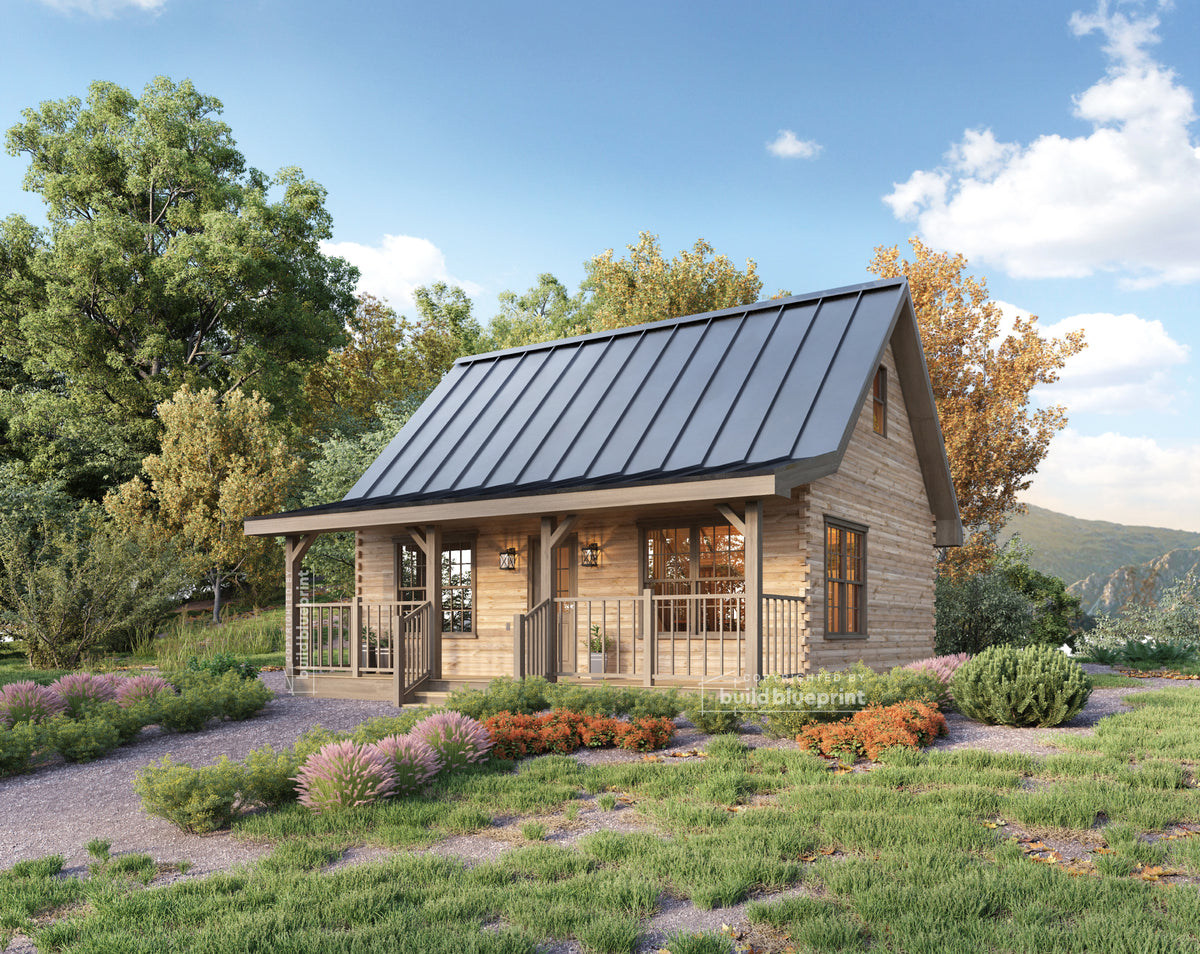
Traditional cabin designs, including our Lean Cabin, Adirondack, and Barn House lines, use conventional vertical walls topped with a separate roof structure, whether gable, shed, or hip style.
Maximized usable space. Vertical walls mean full-height usable space throughout the entire footprint, with no awkward low-ceiling zones. This makes furniture layout, storage, and room planning significantly more straightforward.
Design flexibility. Traditional framing supports a wider range of floor plan configurations, multiple bedrooms with full privacy, dedicated hallways, and more complex room layouts than an A-frame's converging walls typically allow.
Broader style range. From the rustic character of an Adirondack cabin to the clean contemporary lines of a Lean Cottage's shed roof, traditional framing supports a much wider range of aesthetic styles than the A-frame's singular silhouette.
Climate and Site Considerations
If you're building in a heavy snow region, an A-frame's natural snow-shedding ability is a genuine performance advantage, though many of our traditional cabin plans are also engineered with high roof load ratings (some up to 115 PSF) specifically to handle serious snow accumulation, so this isn't an automatic deciding factor.
If you're planning a multi-bedroom family home or a high-occupancy short-term rental, traditional framing's flexibility for room layout often makes more practical sense, particularly for designs with three or more bedrooms where private, full-height rooms matter.
Which Style Performs Better as a Rental?
Both styles perform well in the short-term rental market, but for different reasons. A-frames tend to photograph exceptionally well, the dramatic roofline and vaulted interior are highly distinctive in listing photos, which can drive above-average booking rates. Traditional cabins, particularly barn-style designs with tall vaulted ceilings, offer similar visual impact with more practical room layouts for larger groups.
Bottom Line
Choose an A-frame if you want maximum visual drama, efficient framing, and you're building in a heavy snow region. Choose a traditional cabin design if you need flexible room layouts, multiple private bedrooms, or maximum usable square footage.