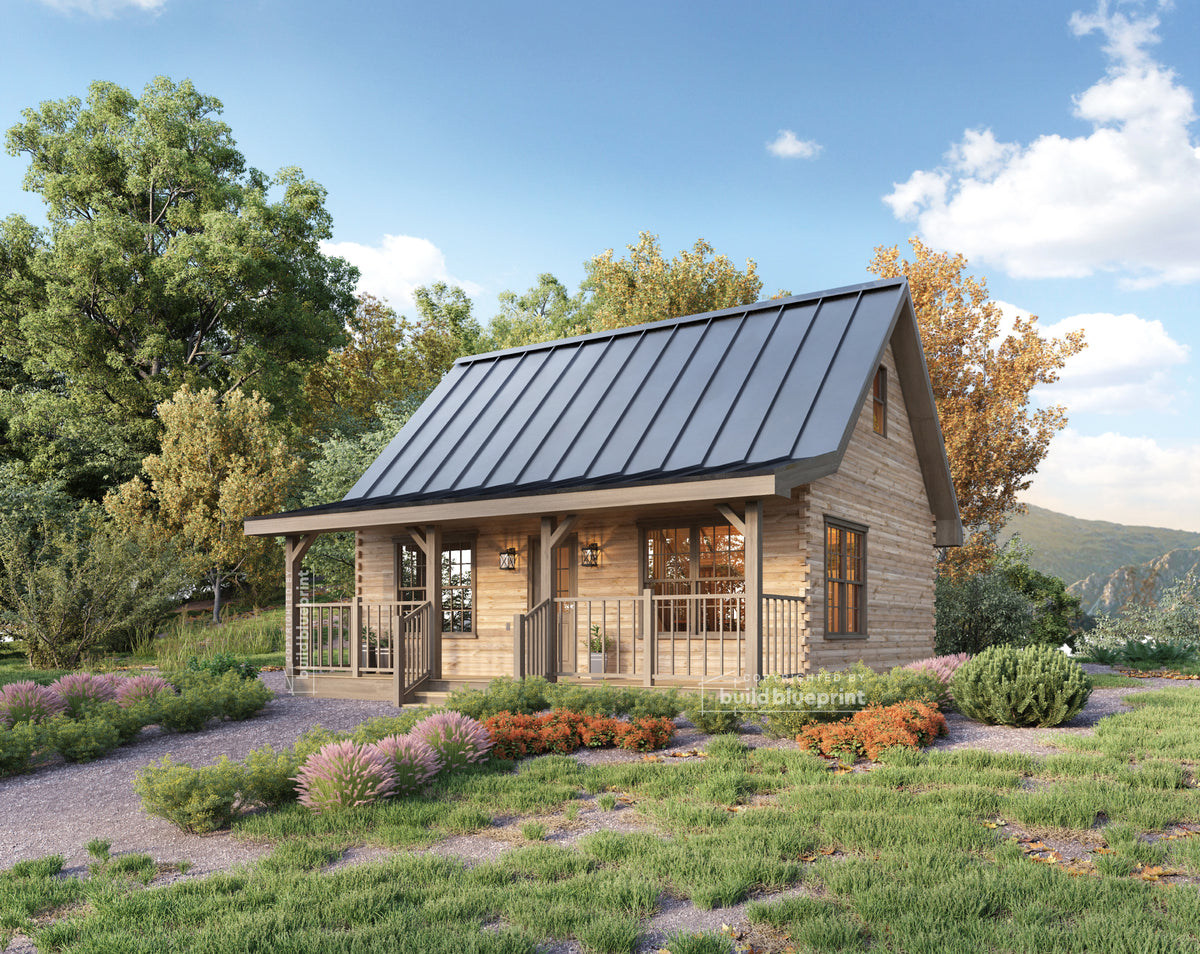

Off-grid living means designing a structure that functions independently of municipal power, water, and sewer systems. It's an appealing goal for many cabin builders, whether for remote land access, self-sufficiency, or simply reducing ongoing utility costs. But building successfully off-grid requires planning for systems that a typical residential plan set doesn't always address. Here's what your cabin needs to consider.
Power: Sizing Your System to Your Plan
Off-grid power typically means solar, sometimes supplemented with wind or a backup generator. The size of the system you need depends directly on your cabin's square footage and how you intend to use it.
Smaller cabins, under 500 SF, with minimal electrical demands (lighting, small appliances, maybe a mini-fridge) can often run on a modest solar setup with battery storage. A compact plan like our 20' x 20' Lean Cottage is a good example: the small footprint, simple shed roof, and single living zone make off-grid power sizing straightforward. Larger cabins, particularly those with full kitchens, water pumps, and any electric heating or cooling, require substantially larger solar arrays and battery banks to meet demand reliably, especially through winter months with reduced daylight.
When choosing a plan for an off-grid build, pay attention to roof orientation and pitch, both of which affect solar panel placement and efficiency. A south-facing roof (in the northern hemisphere) with an appropriate pitch angle for your latitude will perform significantly better than a poorly oriented alternative.
Water: Wells, Catchment, and Storage
Without municipal water, you'll need either a drilled well or a rainwater catchment system, sometimes both, depending on regional water availability and local regulations (some jurisdictions restrict or heavily regulate rainwater collection).
Well drilling costs vary enormously based on regional water table depth, so this is worth investigating during your land evaluation, before you've committed to a specific site. Rainwater catchment, by contrast, requires adequate roof surface area and storage tank capacity, both of which scale with your cabin's footprint and roof design.
Sewer: Septic Systems and Alternatives
Off-grid cabins typically rely on a septic system, which requires soil that passes a percolation test (covered in more detail in our land selection guide). For sites where soil conditions don't support a conventional septic system, alternatives like composting toilets or engineered septic systems exist, though both come with additional cost or maintenance considerations worth researching before you commit to a specific property.
Heating: Beyond the Electrical Grid
Many off-grid cabin owners choose wood-burning stoves as a primary or backup heat source, since they don't depend on your solar system's capacity and provide reliable heat even during extended cloudy periods. If you're planning a wood stove, confirm your chosen plan accommodates appropriate clearances and a properly designed chimney or flue penetration through the roof structure.
Insulation Matters More Off-Grid
When every watt of power is generated and stored on-site, heating and cooling efficiency becomes far more important than in a grid-connected home. Proper insulation throughout walls, roof, and foundation reduces the energy burden on your off-grid systems significantly, making the difference between a power system that comfortably meets your needs and one that's constantly strained.
Structural Considerations for Remote Sites
Off-grid builds are often located in more remote areas, which may mean limited access to building supplies, contractors, and equipment. Plans with simpler framing and construction methods, like our 12' x 18' Tiny A-Frame or the 16' x 20' Redwood Cabin Loft, can be genuinely advantageous for off-grid builders working without easy access to specialized trades or equipment rental.
Permitting Still Applies
It's a common misconception that off-grid means no permits required. In most jurisdictions, building permits, septic permits, and sometimes well permits still apply regardless of grid connection status. Our permit guide covers this process in more detail.
Bottom Line
Building off-grid successfully means planning for power, water, and sewer systems as carefully as you plan the structure itself.