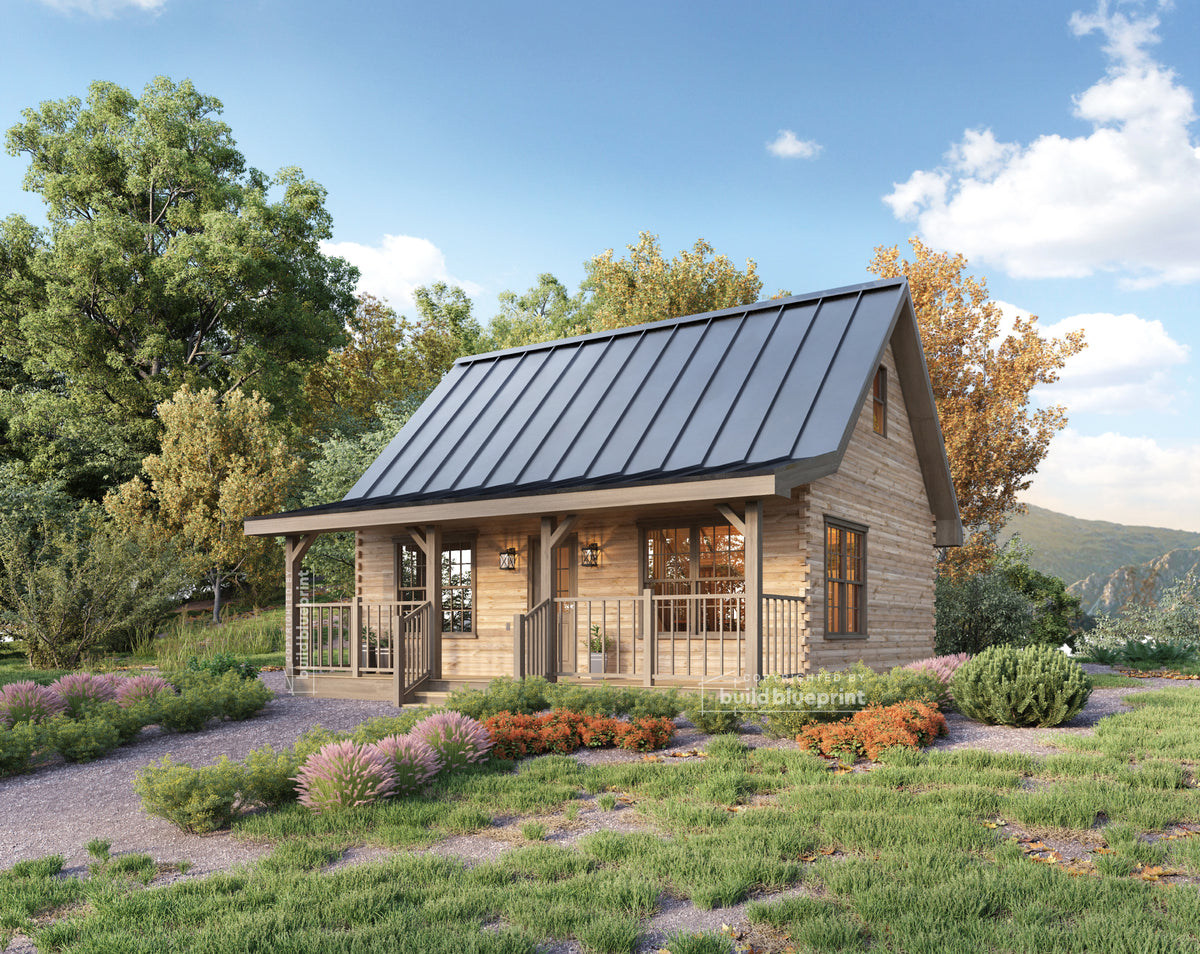

Exterior finishing is the phase that closes the building envelope — meaning your structure goes from an open frame exposed to weather to a weather-tight shell. This phase is sequencing-critical: the order in which roofing, windows, siding, and doors go in affects both the quality of the water and air seal and the vulnerability of your framing to weather damage during the build.
Why Sequencing Matters
An open-framed cabin is vulnerable. Rain, humidity, and temperature swings damage lumber, create conditions for mold, and can warp materials that need to be installed flat and true. Getting the envelope closed as quickly as possible after framing is one of the most important things you can do to protect your investment in the framing phase.
The general sequence: roof first, then windows and doors, then weather barrier, then siding. Each step is designed to protect what's underneath it from water infiltration.
Roofing
The roof goes on before anything else because it's the primary protection for the framing below. The standard sequence for most cabin roof systems:
- Roof sheathing. Structural plywood or OSB is fastened to the rafters, creating a continuous nailing base and structural diaphragm. This was completed at the end of the framing phase.
- Ice and water shield. A self-adhering waterproof membrane is applied at the eaves and any valleys — areas where ice damming or water pooling can force water under the roofing material. Most codes require this in climates with significant snowfall.
- Roofing underlayment. Synthetic or felt underlayment is applied over the sheathing before the finished roofing material goes on, providing a secondary water barrier.
- Finished roofing. Asphalt shingles (most common), metal roofing, or other finished materials are installed from the bottom up, with each course overlapping the one below to shed water downward.
- Flashing. Metal flashing is installed at all penetrations (plumbing vents, chimney if applicable) and transitions (wall-to-roof junctions) to prevent water infiltration at these vulnerable points.
For cabin builds with steep-pitched roofs like our 22' x 36' Catskills A-Frame or 28' x 46' Large Modern A-Frame, roofing work presents significant fall hazard. Safety equipment and experienced roofers are not optional on steep-pitch work.
Windows and Doors
Windows and doors go in after roofing because the roof protects the rough openings during installation. The installation sequence for each unit:
- Rough opening preparation. Rough openings in the framing are verified for size and square. Sill flashing is installed at the bottom of each window opening before the unit goes in.
- Window and door installation. Units are set in the rough opening, shimmed plumb and level, and fastened according to the manufacturer's instructions. Proper shimming is critical — windows and doors that aren't perfectly plumb and square won't operate correctly.
- Flashing and air sealing. Self-adhering flashing tape is applied at the head and jambs, and the gap between the unit and the rough framing is sealed with low-expansion spray foam or backer rod and caulk. This step is frequently rushed and frequently the source of future water problems.
House Wrap and Weather Barrier
Before siding goes on, a continuous weather-resistive barrier (house wrap or building paper) is installed over the framing and sheathing. This layer:
- Prevents wind-driven rain from reaching the structural sheathing
- Allows moisture vapor to escape outward from the wall assembly
- Provides a secondary drainage plane if water gets behind the siding
House wrap is lapped and taped carefully — particularly around window and door openings — to ensure continuity. Gaps or improper lapping are direct pathways for water infiltration.
Siding
Siding goes on last because it's installed over the house wrap and should lap over the window and door flanges or flashing. Siding choice is often driven by the cabin style:
- Board-and-batten is common on barn-style and farmhouse designs like the 20' x 32' Modern Barn House and 34' x 48' Modern Farmhouse
- Lap siding suits traditional and Adirondack-style cabins
- Vertical metal panel works well on A-frames and modern lean-roof designs like our 24' x 36' Modern A-Frame and 26' x 32' Lean Cabin
- Log siding gives a traditional cabin look on a conventionally framed structure
Whatever material you choose, follow manufacturer installation instructions precisely — particularly for required clearances above grade and around windows and doors, which prevent moisture wicking and rot.
Bottom Line
Getting the exterior envelope properly closed is what protects everything that happens inside from weather and moisture for the life of the building. Rushing this phase, skipping flashing steps, or improperly sealing penetrations creates problems that may not show up immediately but will become expensive to fix later.