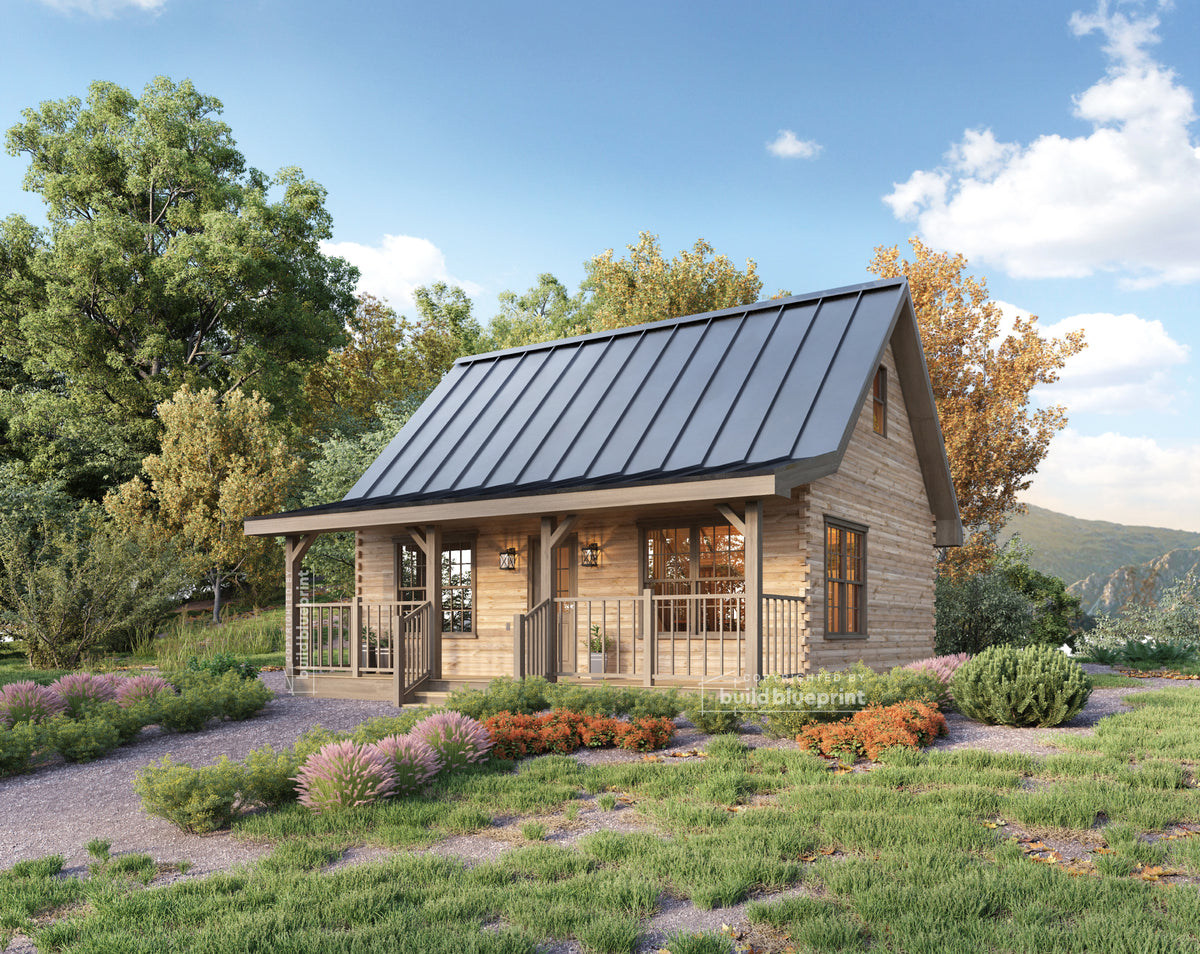

Your foundation choice affects your budget, your timeline, and how well your cabin performs on its specific site. It's also one of the decisions builders most often get wrong, either by choosing based on cost alone or by not understanding how their land actually behaves. Here's how to think through the decision properly.
Concrete Slab Foundations
A concrete slab is a single, solid layer of concrete poured directly on prepared, level ground. It's one of the most common foundation types for cabins and small homes because it's relatively affordable, durable, and provides a clean, flat base for construction.
Best for: Flat, stable building sites with good soil drainage. Slabs work especially well for cabins intended as permanent, year-round residences since they provide excellent thermal mass and don't have a crawlspace that can develop moisture issues.
Drawbacks: Slabs require a level site, which means significant grading costs if your land isn't already flat. They're also harder to retrofit with plumbing changes later, since pipes are typically embedded in the concrete itself.
Concrete Pier (Post) Foundations
Pier foundations use individual concrete footings, often combined with posts or piers, to elevate the structure above grade rather than sitting directly on it. This is the foundation type you'll see most often on our DIY and smaller cabin plans — designs like the 12' x 18' Tiny A-Frame and the 16' x 24' Aspen Cabin are both well-suited to pier foundations on wooded or uneven sites.
Best for: Sloped, uneven, or wooded lots where extensive grading would be expensive or impractical. Piers minimize site disturbance, which matters if you're building in a forested area and want to preserve the natural landscape around your cabin.
Drawbacks: Less thermal efficiency than a slab, since there's open space beneath the structure. May require additional skirting or insulation work in colder climates to prevent pipes from freezing.
Crawlspace Foundations
A crawlspace foundation sits between a slab and a full basement. Short perimeter walls create an accessible (if low-clearance) space beneath the structure, which is useful for running utilities and provides some elevation above grade.
Best for: Sites with moderate slope or moisture concerns where a slab isn't ideal but a full basement isn't necessary. Crawlspaces also make future plumbing or electrical modifications easier than a slab does, since the systems are accessible rather than embedded in concrete.
Basement and Walkout Basement Foundations
A full basement foundation, which several of our larger plans like the 35' x 35' Hilltop Hideout and the 28' x 28' Hilltop Hideout include as an option, adds an entire additional level of usable space beneath the main floor. A walkout basement specifically takes advantage of sloped terrain, allowing the basement level to open directly to grade on one side.
Best for: Sloped lots where you want to maximize total square footage without expanding your building footprint. Walkout basements are particularly valuable for cabins intended as full-time residences or high-capacity vacation rentals, since the added square footage significantly increases usable living space.
Drawbacks: Highest cost of any foundation type, and requires the right site conditions, specifically a sloped lot, to make a walkout basement practical.
How Climate Affects Your Decision
Your foundation choice also needs to account for your local climate. In regions with significant frost depth, foundations need to extend below the frost line to prevent heaving and structural damage as the ground freezes and thaws. This is a code requirement in most northern climates, and it's one of the reasons it's worth consulting your local building department before finalizing your foundation choice, even after you've selected your plan.
How to Decide
Start with your site, not your budget. A sloped, wooded lot will steer you toward piers or a walkout basement regardless of cost, since a slab simply isn't practical there. A flat, cleared lot opens up all options, which means cost and intended use (permanent residence vs. seasonal cabin) become the deciding factors.
Every plan in our catalog lists its compatible foundation types directly in the product specifications, making it easy to filter for plans that match your specific site conditions.
Bottom Line
There's no single best foundation type, only the right foundation for your specific site and goals.