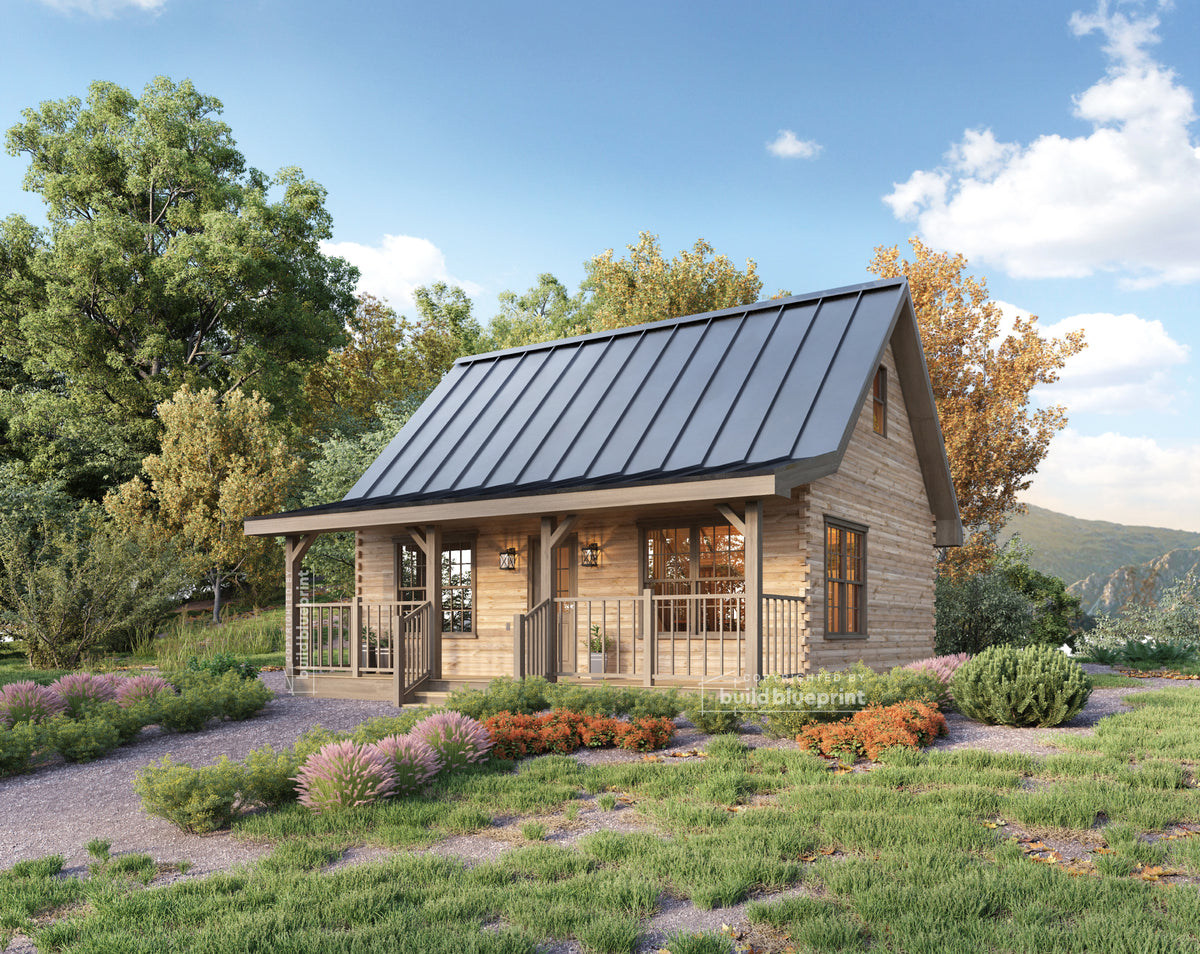
North Carolina's mountain region is one of the most desirable cabin destinations on the East Coast. The Blue Ridge and Smoky Mountain ranges in the western part of the state draw buyers from Charlotte, Raleigh, Atlanta, and Washington DC, creating a robust market for both personal retreats and high-performing short-term rental properties. Land costs and labor rates in North Carolina are higher than in Tennessee or Arkansas, but the rental economics in key markets are strong enough to support the premium.
What a Cabin Build Costs in North Carolina
North Carolina's mountain counties have seen significant construction activity over the past several years, which has tightened contractor availability and pushed labor costs upward — particularly in the Asheville trade area. In most North Carolina mountain markets, contractor-built cabins run $130–$200 per square foot of finished space, depending on elevation, site access, finish level, and the specific county labor market.
What that translates to in real build numbers:
- 500–650 SF cabin (1 bed or studio + loft): $75,000–$130,000 for the structure in most NC mountain markets
- 650–850 SF cabin (2 bed, 1 bath): $105,000–$170,000 for the structure
- 900–1,200 SF cabin (3 bed, 2 bath): $145,000–$240,000 for the structure
These ranges reflect structure cost only — not land, site development, septic, well, or permits. Asheville and immediate surrounding areas (Buncombe County) are at the upper end of this range due to sustained demand and contractor demand. More remote counties — Avery, Mitchell, Yancey, Watauga — offer more competitive labor pricing while still providing the mountain setting buyers are seeking.
North Carolina Regional Build Markets
Asheville / Buncombe County: The highest-demand and highest-cost market in the state. Asheville is a nationally recognized destination with a strong tourism economy, vibrant food and arts scene, and consistent year-round visitor traffic that supports strong short-term rental performance. Land costs have risen significantly; contractor availability is competitive.
High Country (Boone, Banner Elk, Blowing Rock — Watauga, Avery, Mitchell Counties): A strong ski and outdoor recreation market with four-season appeal. Proximity to Appalachian State University in Boone, Beech Mountain Resort, and Sugar Mountain creates consistent demand for cabin rentals. Land is more affordable than the Asheville area; labor costs are moderate. The elevation (many sites are above 4,000 feet) requires attention to snow load engineering and insulation values.
Smoky Mountain Foothills (Haywood, Jackson, Swain Counties): The western edge of North Carolina, bordering Great Smoky Mountains National Park. This area captures Smoky Mountain tourism spillover from Tennessee at lower land costs than Sevier County equivalents. Waynesville, Bryson City, and the Nantahala Gorge area draw outdoor recreation visitors year-round.
Uwharrie / Piedmont Foothills: A lower-elevation market for buyers seeking affordable recreational land within 1–2 hours of Charlotte or Greensboro. Lower cabin rental rates than the mountains, but significantly more affordable land and labor costs. Hunting and fishing cabin builds are common here.
Site Development Costs in North Carolina
North Carolina mountain sites present some specific site challenges that affect development cost:
- Septic system: North Carolina Department of Health and Human Services regulates on-site wastewater systems. A conventional system in most NC counties runs $6,000–$15,000. The state's mountain geology — shallow rock, steep slopes, and limited suitable soil — frequently requires engineered systems that cost more. A soil evaluation is required before a permit is issued; not all sites in the NC mountains will perc at all.
- Well: Mountain wells in NC are typically drilled into hard rock and can be expensive. Budget $8,000–$20,000 and get a local estimate before committing to any mountain lot.
- Grading and slope work: Mountain lots in NC are frequently steep, requiring significant grading, retaining walls, or cut-and-fill work to establish a building pad. This is one of the most commonly underestimated site costs on NC mountain builds — budget $10,000–$40,000+ for challenging sites.
- Driveway: Steep mountain driveways often require gravel with proper base preparation, drainage culverts, and retaining where grades are extreme. Budget $3,000–$12,000+ depending on length and slope.
- Electric service: Blue Ridge Electric, Four County Electric, and other co-ops serve mountain NC. Service extension cost varies widely by terrain — confirm with the local co-op before finalizing lot selection.
North Carolina Permit Requirements
North Carolina enforces a statewide residential building code — the North Carolina Residential Code — at the county level. All 100 counties in NC are required to enforce the code, though the rigor of enforcement and the availability of inspectors varies between more populated and more rural counties.
In practice:
- A building permit is required for all residential construction in North Carolina, regardless of county or location.
- Plans must be submitted to the county building department for review. Simple residential structures in most counties can be reviewed by county staff without a licensed professional stamp; more complex structures or those in higher-risk seismic or wind zones may require engineer review.
- High Country builds above certain elevations may trigger additional snow load requirements under the NC code.
- Some mountain counties have additional zoning overlays or watershed protection requirements that affect site selection and design.
Contact your specific county building department before purchasing plans or land. NC's uniform code means the general process is consistent, but county-specific amendments and local zoning rules vary.
For a broader overview of the permit process: How to Get a Building Permit for Your Cabin: A State-by-State Guide
North Carolina Airbnb Cabin Economics
North Carolina's mountain short-term rental market is one of the strongest in the Southeast. Asheville-area properties with strong views, outdoor amenities, and design quality command premium nightly rates and high occupancy year-round. A well-positioned 2–3 bedroom cabin in the Asheville-Brevard corridor can generate $40,000–$80,000+ in annual gross revenue. High Country ski-area properties see strong seasonal peaks in winter and again in fall foliage season.
The economics in NC mountain markets justify higher build costs because of the combination of strong nightly rates, year-round demand, and the large catchment population within a 4-hour drive from Charlotte, Raleigh, Atlanta, and Washington DC.
Plans That Work Well for North Carolina Builds
- 20' x 26' Adirondack permit-ready set — 2 bed, 1 bath, 650 SF, loft — versatile layout suited for personal retreats and smaller NC mountain rentals
- 28' x 28' Long Creek permit-ready set — 2 bed, 1 bath, 784 SF, open layout with covered porch
- 32' x 32' Alpine permit-ready set — 3 bed, 2 bath, 1,024 SF — strong performer for Blue Ridge builds
- 24' x 36' Nordic A-Frame permit-ready set — 3 bed, 2 bath, 1,152 SF — A-frame aesthetic is highly marketable in the NC mountain rental market
- 35' x 35' Hilltop Hideout permit-ready set — 3 bed, 2 bath, 1,225 SF — for buyers targeting higher sleeping capacity and larger groups
The Bottom Line
North Carolina is a premium cabin-building market — higher land costs, higher labor costs, and more demanding site conditions than Tennessee or Arkansas, but with rental economics that justify the premium in the right locations. Total project costs for a complete NC mountain cabin build including site development typically run $150,000–$300,000+ depending on size, region, slope conditions, and finish level. The variables most within your control are footprint size, finish level, and site selection. Avoid steeply sloped lots unless you've priced the grading work. Get multiple contractor bids in your specific county before finalizing your plan size.