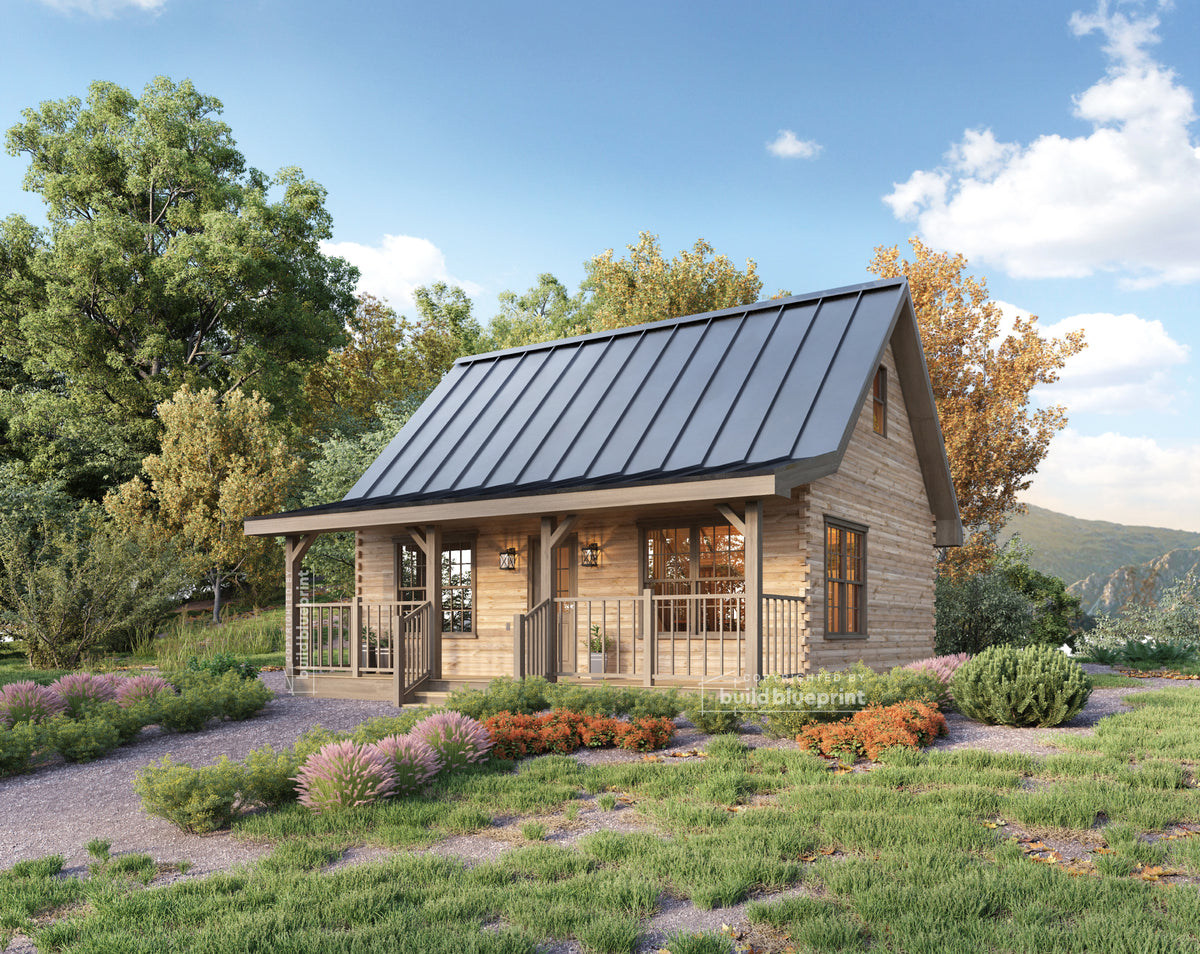
Tennessee is one of the most active cabin-building markets in the United States. The combination of affordable rural land, relatively low construction labor costs compared to national averages, strong short-term rental demand in mountain and lake regions, and no state income tax on rental income makes Tennessee a destination for buyers building everything from personal retreats to income-generating Airbnb properties.
Here is a complete cost picture for building a cabin in Tennessee — what the build itself costs, what site development adds, and what varies by region.
What a Cabin Build Costs in Tennessee
Tennessee is consistently among the lower-cost states for residential construction labor, which directly benefits cabin builders. In most Tennessee markets, contractor-built cabins run $100–$160 per square foot of finished space, depending on finish level, foundation type, and the specific labor market in the county.
What that translates to in real build numbers:
- 500–650 SF cabin (1 bed or studio + loft): $60,000–$110,000 for the structure in most Tennessee markets
- 650–850 SF cabin (2 bed, 1 bath): $85,000–$140,000 for the structure
- 900–1,200 SF cabin (3 bed, 2 bath): $120,000–$190,000 for the structure
These ranges reflect the structure only — not land, not site development, not permits. The Smoky Mountains region (Sevier County, Blount County, Cocke County) commands higher labor costs than rural West or Middle Tennessee due to demand from vacation rental developers. Expect costs at the upper end of each range in the Gatlinburg and Pigeon Forge trade area.
Tennessee’s Regional Build Markets
East Tennessee / Smoky Mountains: The highest-demand cabin market in the state. Land is more expensive, labor is tighter, and competition from short-term rental developers has pushed construction costs upward in Sevier County and surrounding areas. A well-positioned Airbnb cabin here — 2 bed, 2 bath, 800–1,000 SF with mountain views — commands strong nightly rates that justify the higher build cost. Buyers in this region should budget at the upper end of the per-SF range and confirm permit requirements with Sevier County directly.
Cumberland Plateau / Middle Tennessee: A growing market for personal retreats and lower-volume Airbnb builds. Land is more affordable than the Smokies, labor costs are moderate, and the area attracts buyers from Nashville and Knoxville looking for weekend properties within 2 hours of a major city.
West Tennessee / Rural Flatlands: The lowest construction cost region in the state. Flat terrain means straightforward foundations and site work. Less cabin-specific demand means more contractor availability and competitive bid pricing.
Natchez Trace Corridor / Southwest Tennessee: Less frequently discussed but worth noting for buyers targeting hunting cabin builds or agricultural land. Remote sites are common, which means septic and well are standard, and road access can be a significant site cost variable.
Site Development Costs in Tennessee
Tennessee cabin sites are predominantly rural, which means municipal utilities are rarely available. Budget these separately from the construction cost:
- Septic system: Required on virtually all rural Tennessee lots not served by municipal sewer. A conventional gravity-fed system runs $6,000–$12,000 in most Tennessee counties. Tennessee Department of Environment and Conservation (TDEC) regulates septic permitting; site evaluation is required before a permit is issued.
- Well: Rural Tennessee sites typically require a drilled well. Costs vary by depth to water table and by county — budget $5,000–$12,000 and get a local estimate before committing to a lot.
- Land clearing and grading: Tennessee's East region is predominantly wooded and sloped. Clearing a half-acre building pad on a typical East Tennessee lot and grading a driveway can run $8,000–$25,000 depending on tree density, slope, and rock conditions. West Tennessee lots are typically flat and easier to prepare.
- Driveway: Gravel driveways run $2,000–$8,000 in most Tennessee markets depending on length and base conditions.
- Electric service: Tennessee Valley Authority (TVA) and local power distributors serve most of the state. Service extension costs depend on distance from the existing line to the meter location.
Tennessee Permit Requirements
Permit requirements in Tennessee vary significantly by county. Tennessee does not have a statewide uniform residential building code — each county adopts and administers its own requirements, and enforcement rigor varies widely.
In practice:
- Many rural, unincorporated Tennessee counties have adopted the International Residential Code (IRC) and require permits for all residential construction regardless of size.
- Some counties — particularly in rural West and Middle Tennessee — have more limited permit requirements and may not require a permit for structures under a certain square footage threshold.
- Incorporated cities and towns within any county have their own requirements separate from the county.
- A professional stamp from a Tennessee-licensed architect or engineer is not universally required for small residential structures, but some jurisdictions require it. Verify with your county building department before purchasing plans.
The authoritative answer for your specific lot is your county building department. Call before you buy plans or land.
For a broader overview of the permit process: How to Get a Building Permit for Your Cabin: A State-by-State Guide
Tennessee Airbnb Cabin Economics
Tennessee has among the strongest short-term rental markets in the country, driven by Smoky Mountain tourism. A well-positioned 2–3 bedroom cabin in the Gatlinburg-Pigeon Forge corridor can generate $40,000–$80,000+ in annual gross revenue depending on size, amenities, and marketing. That income potential has driven significant cabin construction activity in East Tennessee and pushed land prices higher in the most desirable areas.
For buyers evaluating a Tennessee Airbnb build, the economics favor cabins in the 800–1,200 SF range with 2–3 bedrooms, 2 bathrooms, hot tub access, and mountain or water views. The nightly rate premium for those features is real and consistent in the Smoky Mountain market.
See how other buyers have built income-generating cabins from Build Blueprint plans: Nordic A-Frame Built Into a Top-5% Airbnb
Plans That Work Well for Tennessee Builds
These are among the most commonly purchased permit-ready sets for Tennessee cabin builds, across a range of sizes and budgets:
- 20' x 26' Adirondack permit-ready set — 2 bed, 1 bath, 650 SF, loft — the most-built plan in the catalog, well-suited for personal retreats and smaller Airbnb builds
- 28' x 28' Long Creek permit-ready set — 2 bed, 1 bath, 784 SF, open layout with covered porch
- 32' x 32' Alpine permit-ready set — 3 bed, 2 bath, 1,024 SF — strong performer for Smoky Mountain rental builds
- 24' x 36' Nordic A-Frame permit-ready set — 3 bed, 2 bath, 1,152 SF, A-frame design — high visual appeal for short-term rental photography
- 35' x 35' Hilltop Hideout permit-ready set — 3 bed, 2 bath, 1,225 SF — for buyers prioritizing sleeping capacity and interior space
The Bottom Line
Tennessee is one of the best states in the country to build a cabin — favorable labor costs, accessible rural land, strong rental demand in key regions, and county-level permitting that is manageable in most jurisdictions. Total project costs for a complete cabin build including site development typically run $130,000–$250,000 depending on size, region, and finish level. The variables most within your control are footprint, finish level, and design fees. Get local contractor bids before finalizing your plan selection, confirm permit requirements with your specific county, and price out site costs before committing to a lot.