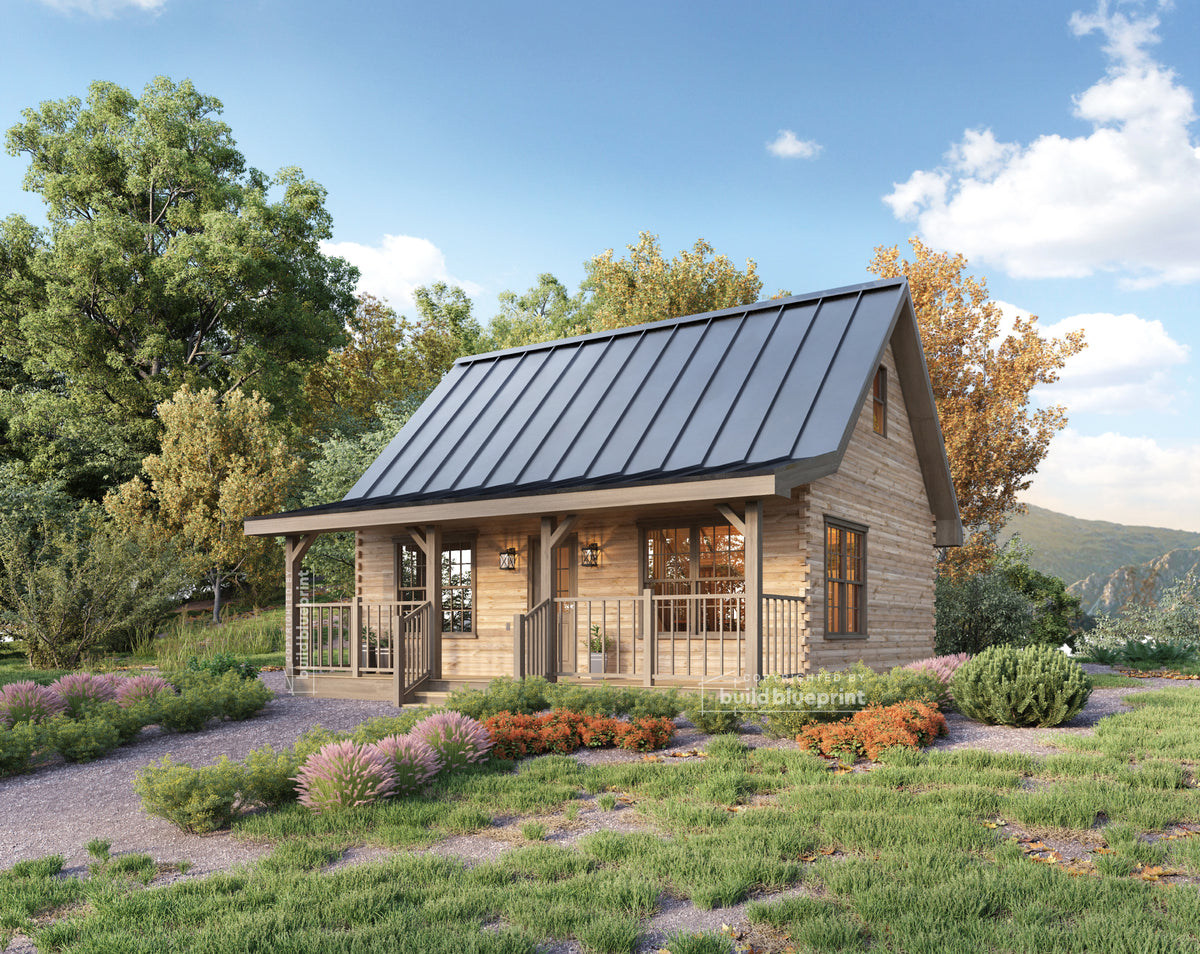

Heating a cabin is a different problem than heating a conventional house. Cabins are often in more extreme climates, used intermittently, built with vaulted ceilings that stratify heat, and sometimes located off the electrical grid entirely. The right heating system depends on how your cabin is built, where it is, and how you use it. Here’s how the main options compare.
Mini Split Heat Pumps: The Default Choice for Most Cabin Builds
Mini split heat pumps have become the standard heating and cooling solution for cabin builds. They provide both heating and cooling in one system, require no ductwork, and work well in the open floor plans and vaulted ceiling configurations common in our catalog — from the 22’ x 28’ Lean Cottage to the 32’ x 32’ Alpine Cabin.
Best for: Grid-connected cabins in moderate to cold climates, any cabin where cooling is also needed in summer, cabins used year-round or frequently enough to justify a permanent HVAC system.
Key consideration for cold climates: Choose a cold-climate or hyper-heat model rated to -13°F or lower. See our mini split sizing guide for BTU recommendations by cabin size.
Installed cost: $1,200 to $3,500 per zone for a standard single-zone system.
Wood Stoves: The Off-Grid Standard
A wood stove is the most reliable heat source available for remote and off-grid cabin builds. A properly sized wood stove can heat a 600 to 1,000 SF open-plan cabin — like our 20’ x 26’ Adirondack Cabin or 26’ x 32’ Lean Cabin — entirely on its own in most climates.
Best for: Off-grid builds, remote locations, seasonal hunting or fishing cabins, or any build where electricity is unreliable or expensive. A wood stove is also a strong supplemental heat source paired with a mini split.
Key considerations: A wood stove requires a proper chimney installation with a UL-listed flue and correct clearances to combustibles — specified in your plan’s construction details. Requires ongoing fuel sourcing and manual operation.
Installed cost: $1,500 to $4,000 for stove and chimney installation, plus $500 to $3,000 for the stove unit itself.
Propane Heating: Remote but Grid-Independent
Propane heating provides reliable heat without electrical dependency while delivering consistent, thermostat-controlled comfort that a wood stove can’t match.
Best for: Remote cabins used regularly in winter, off-grid builds where consistent temperature control matters but electrical power is limited, cabins rented out where guests can’t manage a wood stove.
Key considerations: Propane requires a tank (typically 100 to 500 gallons) and periodic delivery. Tank placement and delivery access need to be planned during the site work phase. Propane prices are volatile and vary significantly by region.
Installed cost: $2,000 to $6,000 for heating equipment plus $800 to $2,500 for tank installation.
Electric Resistance Heating: Simple but Costly to Operate
Electric baseboard heaters and wall heaters are inexpensive to install ($50 to $300 per unit) but are among the least efficient heating options available — far less efficient than a mini split heat pump. Best used for supplemental heat in individual rooms or loft spaces where a dedicated mini split zone isn’t cost-justified.
Radiant Floor Heating: Premium Comfort, Higher Cost
Radiant floor heating provides highly comfortable, even heat with no cold spots. It’s particularly effective in bathrooms and in slab-foundation builds where the thermal mass of the concrete stores and radiates heat efficiently. Hydronic radiant systems must be installed before the slab is poured — a rough-in phase decision, not a finish phase option.
Installed cost: Electric radiant mats: $8 to $15 per SF installed. Hydronic systems: $10 to $20 per SF installed, plus boiler equipment.
The Right Choice for Most Cabin Builds
For most cabin builds — grid-connected, in moderate to cold climates, used year-round or seasonally — a correctly sized cold-climate mini split is the right primary heating system. Pair it with a wood stove if you want backup heat or off-grid capability. Add electric baseboard in individual bedrooms if a multi-zone mini split isn’t in the budget.