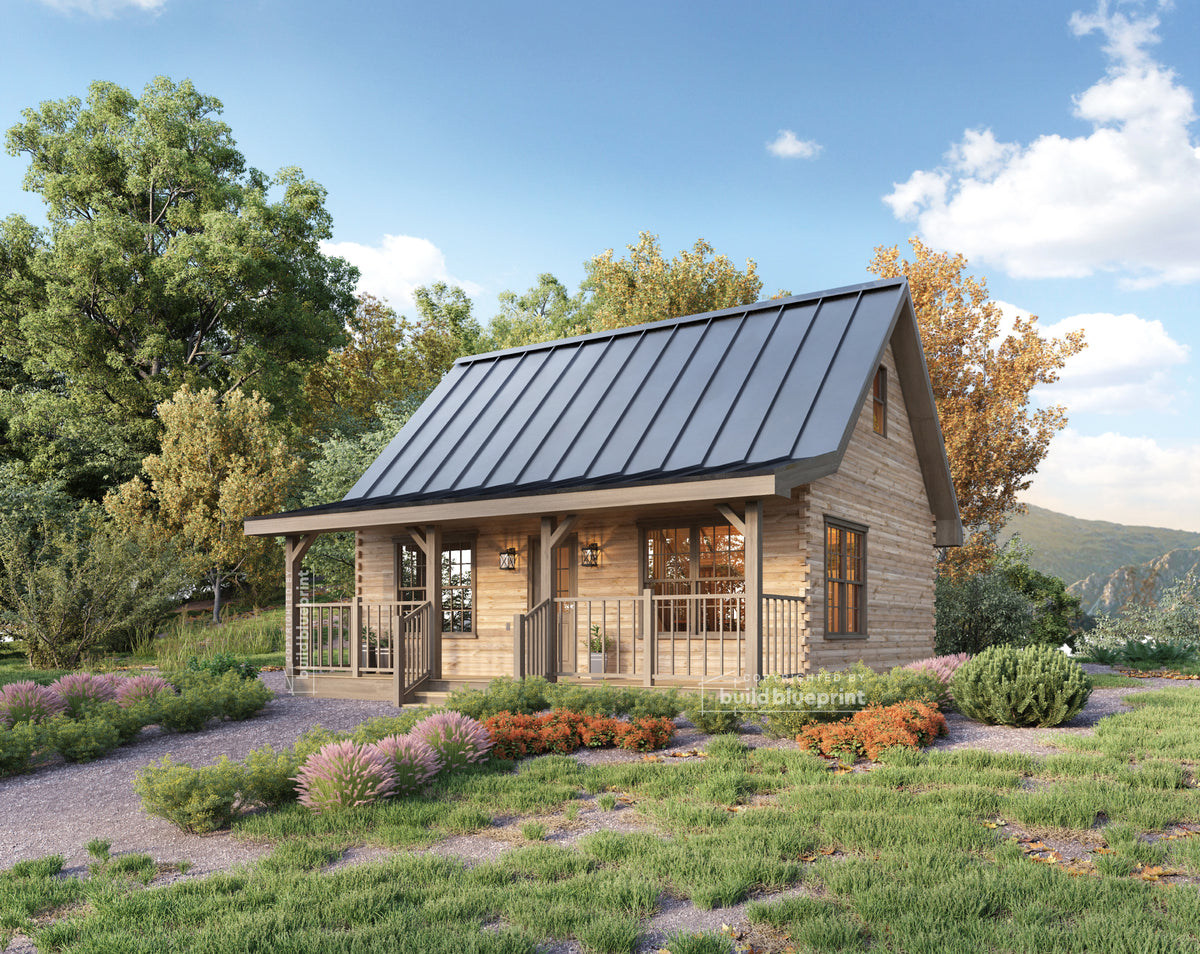

One of the first questions every prospective cabin builder asks is simple: how much is this actually going to cost? The honest answer is that it depends heavily on size, materials, finish level, and location, but you can get a remarkably accurate estimate before you ever break ground if you know what to look at.
The Two Costs You Need to Separate
Cabin building costs break down into two distinct categories that are easy to confuse: the cost of your architectural plans, and the cost of actually constructing the building. Plans typically run a few hundred dollars total. Construction costs are where the real budget lives, and they scale directly with your square footage, foundation type, and finish choices.
Materials Cost by Square Footage
As a general rule of thumb across our catalog, you can expect:
- Under 400 SF (tiny cabins, DIY builds): $4,000 to $15,000 in materials, often achievable as an owner-builder project — see our 12' x 18' Tiny A-Frame and 12' x 20' Small Cabin Loft as examples of what's achievable in this range
- 400 to 1,000 SF (compact cabins and cottages): $25,000 to $60,000 depending on finish level and foundation type — our 20' x 24' Budget Cabin and 22' x 28' Lean Cottage are popular entry points in this range
- 1,000 to 1,500 SF (full-size family cabins): $55,000 to $90,000
- 1,500 to 2,500 SF (large cabins and farmhouses): $80,000 to $120,000+
These figures reflect materials only. Labor costs, if you're hiring a contractor rather than building yourself, typically add 40-60% on top of materials cost, though this varies significantly by region and contractor.
What Drives Cost Beyond Square Footage
Foundation type is one of the biggest cost variables. A simple concrete pier foundation is significantly cheaper than a full basement or walkout basement foundation, but piers aren't suitable for every site or climate. Our foundation comparison guide breaks down which option fits which situation.
Roof complexity and load rating also matter. Cabins designed for heavy snow regions require a higher PSF roof load rating, which means more substantial framing and higher material costs than a comparable cabin built for a milder climate.
Number of bathrooms is a bigger cost driver than most people expect. Plumbing, fixtures, and finish work for additional bathrooms add up quickly, which is why our two-bathroom plans typically run noticeably higher than comparable one-bathroom designs at a similar square footage.
The DIY Factor
If you're building it yourself rather than hiring a general contractor, your costs shift dramatically. Many of our DIY-friendly plans, like the 12' x 18' Tiny A-Frame or the 16' x 20' Redwood Cabin Loft, are specifically designed with straightforward framing that an experienced owner-builder can tackle without specialized equipment. These plans tend to sit at the lower end of the cost spectrum precisely because the design avoids unnecessary structural complexity.
Don't Forget These Often-Overlooked Costs
- Permit fees, which vary by jurisdiction but typically run a few hundred to a few thousand dollars
- Site preparation, including clearing, grading, or excavation depending on your land
- Utility connections, including well/septic if you're building off-grid or in a rural area without municipal service
- Interior finishes, which aren't included in the base materials estimate and can swing your total significantly depending on your choices
How to Get a More Precise Estimate
Every Build Blueprint plan set includes a complete materials list, which is the single best tool for getting an accurate cost estimate. Take that list to two or three local suppliers or contractors for quotes specific to your region; material costs can vary 20-30% just based on local market conditions and availability.
Bottom Line
Cabin construction costs scale predictably with size and complexity, which means you can plan your budget with real confidence before committing to a specific build.